Commercial Roofing Harrisburg PA: What Building Owners Need to Know About Roof Coatings in 2026
Commercial roofing in Harrisburg PA typically costs 50-70% less with a professional coating restoration than a full replacement, extending roof life 10-15 years.
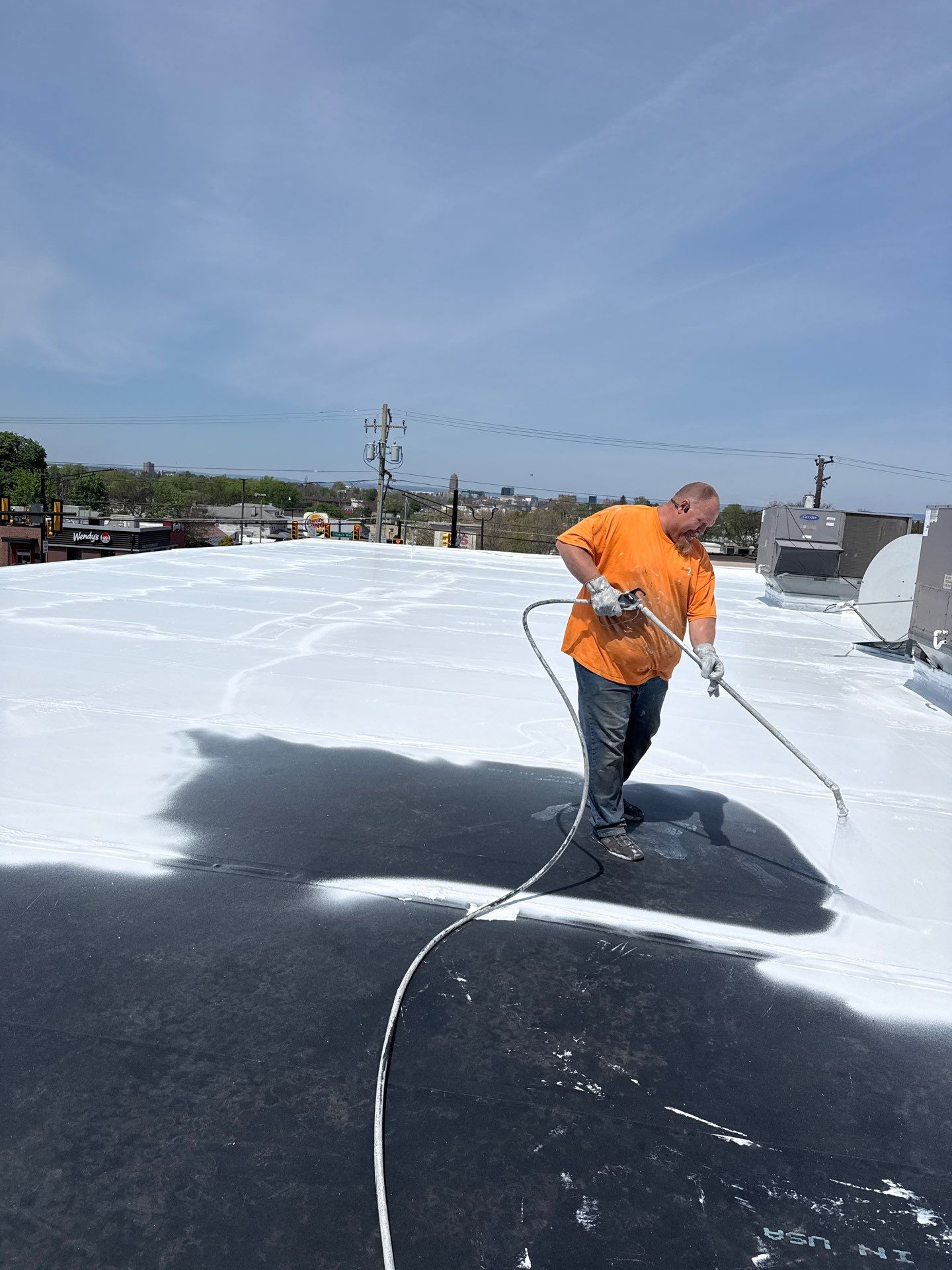
If you manage a commercial building in the Harrisburg area and your flat roof is showing its age, you have a real decision to make this summer. Full replacement is one option. But for most building owners in Central Pennsylvania, commercial roofing in Harrisburg PA through a coating restoration is the smarter financial move - and the one that experienced facility managers keep coming back to. At Schultz Roofing, Inc, we have been doing commercial roof coatings exclusively since 1997, and the pattern is consistent: the right coating system applied at the right time adds a decade or more to a roof that most people assumed was finished.
This guide covers what building owners in the Harrisburg region need to understand about commercial roof coatings, how to tell if your flat roof qualifies, and what the restoration process actually looks like when it is done by specialists.
Why Harrisburg PA Building Owners Are Choosing Coating Over Replacement
Summer in Central Pennsylvania is hard on commercial roofs. Daytime temperatures in Harrisburg push well into the 90s, and dark membrane surfaces absorb heat that drives interior cooling costs up and accelerates surface degradation. Add afternoon thunderstorms and high humidity throughout June, July, and August, and you have conditions that punish any roof system with deferred maintenance.
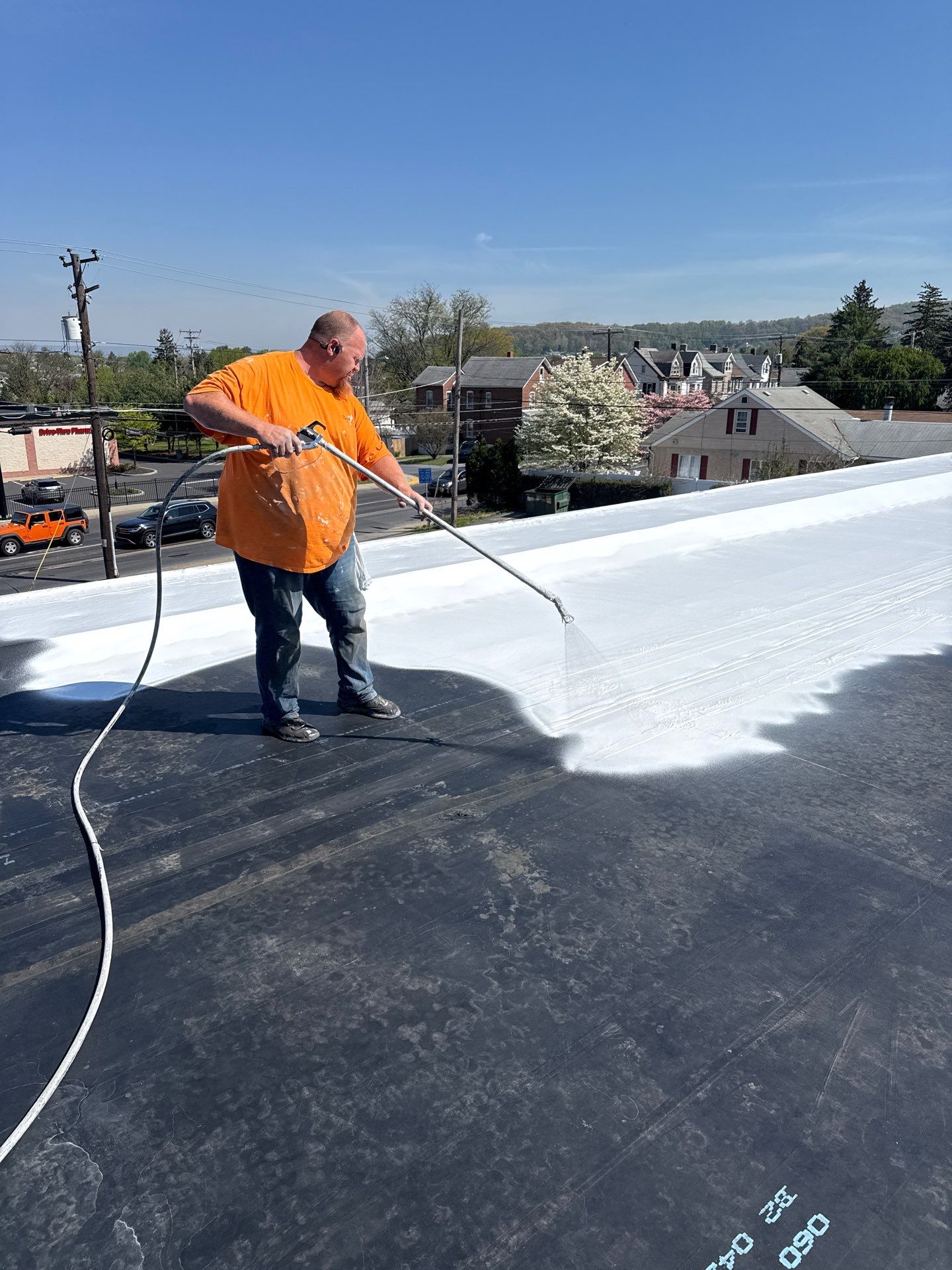
A full tear-off and replacement addresses the problem, but it comes with major disruption to your operations, significant landfill waste, and a cost that can be two to three times higher than a restoration. A properly applied commercial roof coating does something different - it seals the existing membrane, reflects heat instead of absorbing it, and creates a waterproof layer that performs better under Pennsylvania's summer conditions than the original membrane in many cases.
The 50-70% cost savings versus replacement is not a marketing claim. It comes from the straightforward math of material and labor costs when you are restoring rather than replacing. And because warranties on quality coating systems run up to 20 years, building owners get long-term protection without the long-term replacement price tag.
For a deeper look at how coating specialists approach this differently than general roofing contractors, our post on Harrisburg PA commercial roofer: why coating specialists outperform general contractors walks through the key differences in process, materials, and long-term outcomes.
What Types of Commercial Roofs Qualify for Coating Restoration
Not every roof is a coating candidate, and one of the most important things we do at Schultz Roofing, Inc is give building owners an honest assessment before recommending anything. That said, the majority of flat and low-slope commercial roofs in the Harrisburg region qualify for restoration if the underlying structure is sound.
📞 Need help now? Call Schultz Roofing, Inc at (570) 274-2057 for a free estimate.
EPDM Rubber Roofs
EPDM is one of the most common flat roof systems on commercial buildings in Central Pennsylvania - warehouses, church facilities, school buildings, and office complexes all use it. Over time, EPDM dries out, seams lift, and the surface becomes brittle. A quality EPDM coating system bonds to the existing membrane, seals seams and penetrations, and restores the waterproofing that has degraded over years of Pennsylvania weather.
TPO and PVC Membrane Roofs
Single-ply thermoplastic membranes hold up well when they are new, but seam failures and UV degradation are common after the first decade. Coating these systems - when the core membrane is still structurally intact - extends their service life significantly without the disruption of a full replacement.
Metal Roofs
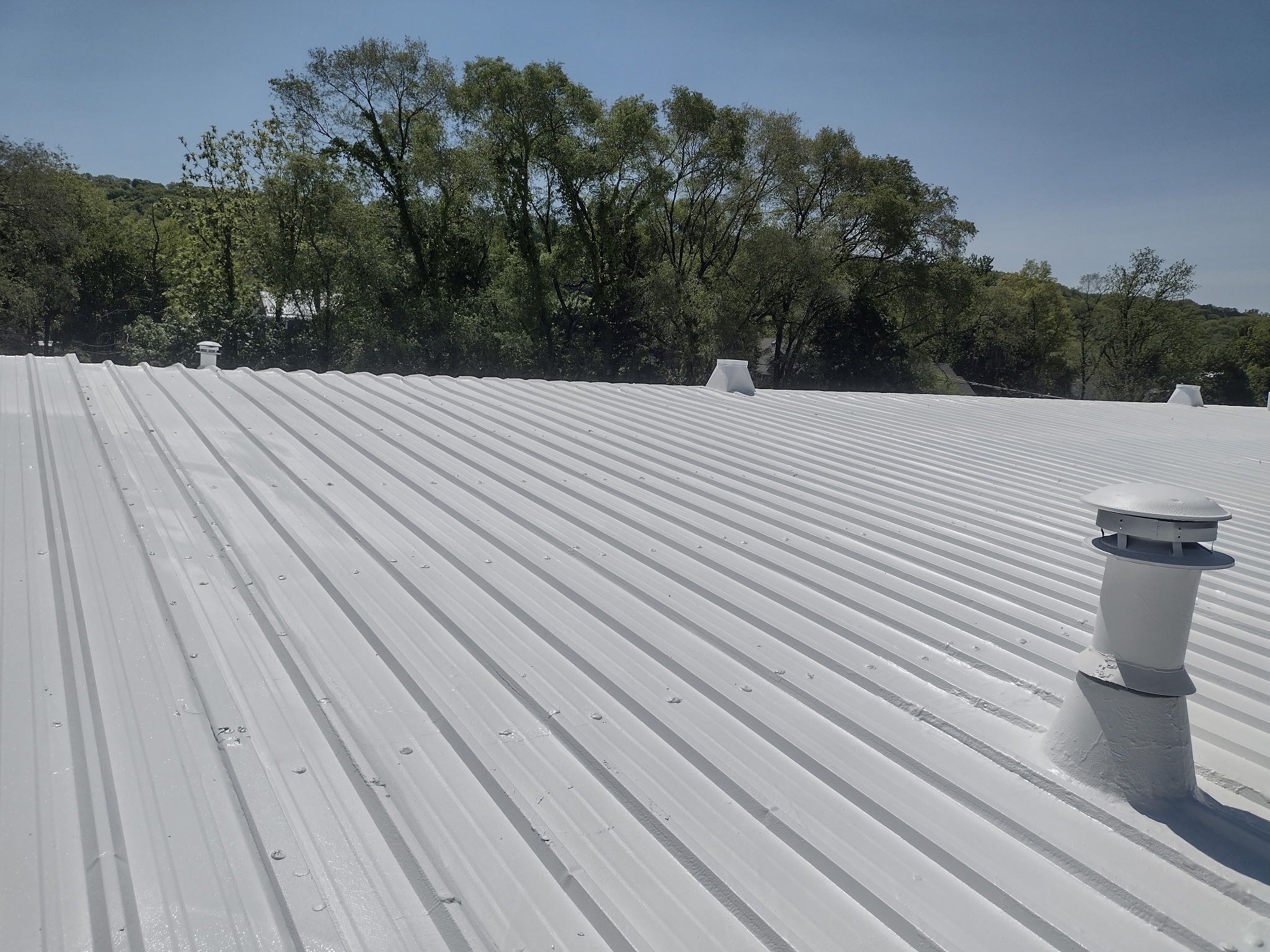
Metal roofs on commercial buildings are excellent candidates for coating restoration. Rust, lap seam failures, and fastener backouts are the most common problems, and a silicone or elastomeric coating applied over a properly prepared metal surface stops leaks, prevents further rust, and adds meaningful reflectivity. For a facility running air conditioning through Harrisburg's summer heat, that reflectivity translates directly into lower energy costs.
Foam Roof Systems
Spray polyurethane foam roofs require periodic recoating to maintain their weatherproofing properties - the coating is what protects the foam from UV breakdown. Recoating a foam roof on schedule is straightforward maintenance that keeps a well-installed foam system performing for decades.
Need help now? Call Schultz Roofing, Inc at (570) 274-2057 for a free estimate.
How to Know Your Commercial Roof Needs Attention Before Summer Gets Worse
Summer is the worst time to discover a failing roof. Heavy rain events in the Harrisburg area can drop several inches of water in a matter of hours, and a roof that was marginal in spring will fail under that kind of load. Here are the signs that should trigger a professional assessment now rather than after the next storm.
Standing Water After Rain
Flat roofs are designed with slope to drain. If water is pooling and sitting for more than 48 hours after a rain event, you have a drainage problem that is accelerating membrane breakdown. Every summer storm adds to the cumulative stress.
Interior Water Stains or Active Leaks
By the time a leak shows up on a ceiling tile inside the building, the water has usually been traveling through the roof assembly for a while. The surface entry point is often not directly above where the stain appears. This is one reason professional assessment matters - tracing a leak accurately requires experience with commercial roof systems.
Visible Membrane Cracking, Blistering, or Separation
Surface cracking in EPDM, blistering in modified bitumen, or seam separation in single-ply systems are all signs that the membrane's protective properties are compromised. These are exactly the conditions where a coating restoration adds the most value - you are reinforcing a system that is failing at the surface, not throughout its entire depth.
Energy Bills Climbing Without a Clear Cause
A degraded roof membrane absorbs more heat and loses more conditioned air. If your HVAC costs have been climbing during summer months without a corresponding change in occupancy or equipment, the roof is worth investigating. Reflective coatings can meaningfully reduce the thermal load on a commercial building in Central Pennsylvania's summer climate.
Our commercial roof guide goes deeper on what to look for and how to document conditions before calling for a professional assessment.
Commercial Roof Coating vs Replacement: The Real Cost Comparison
Facility managers and building owners ask us about this comparison constantly, and it is worth being direct about the numbers. A coating restoration typically costs a fraction of what full replacement costs on a per-square-foot basis. The labor savings alone are substantial because there is no tear-off, no disposal, and no need to close down sections of the building for extended periods.
Beyond the upfront cost, there are additional financial factors that favor restoration when the roof qualifies:
No landfill disposal costs for old membrane material
Reduced disruption to building operations and tenants
Energy savings from reflective coating surfaces during summer months
Warranty coverage that extends the asset life on the balance sheet
Ability to stage work in phases if budget requires it
That said, restoration is not the right answer for every situation. If the roof deck has significant structural damage, if moisture has saturated the insulation layer throughout, or if the membrane has failed beyond the point where a coating can create a reliable bond, then replacement is the responsible recommendation. At Schultz Roofing, Inc, we have done this work long enough to know the difference, and we tell building owners what they need to hear rather than what they want to hear.
For a straightforward breakdown of what commercial roof coating projects typically involve financially, our cost FAQ covers the most common questions we get from Harrisburg area building owners.
Why Schultz Roofing Is the Commercial Roofing Choice for Harrisburg PA Buildings
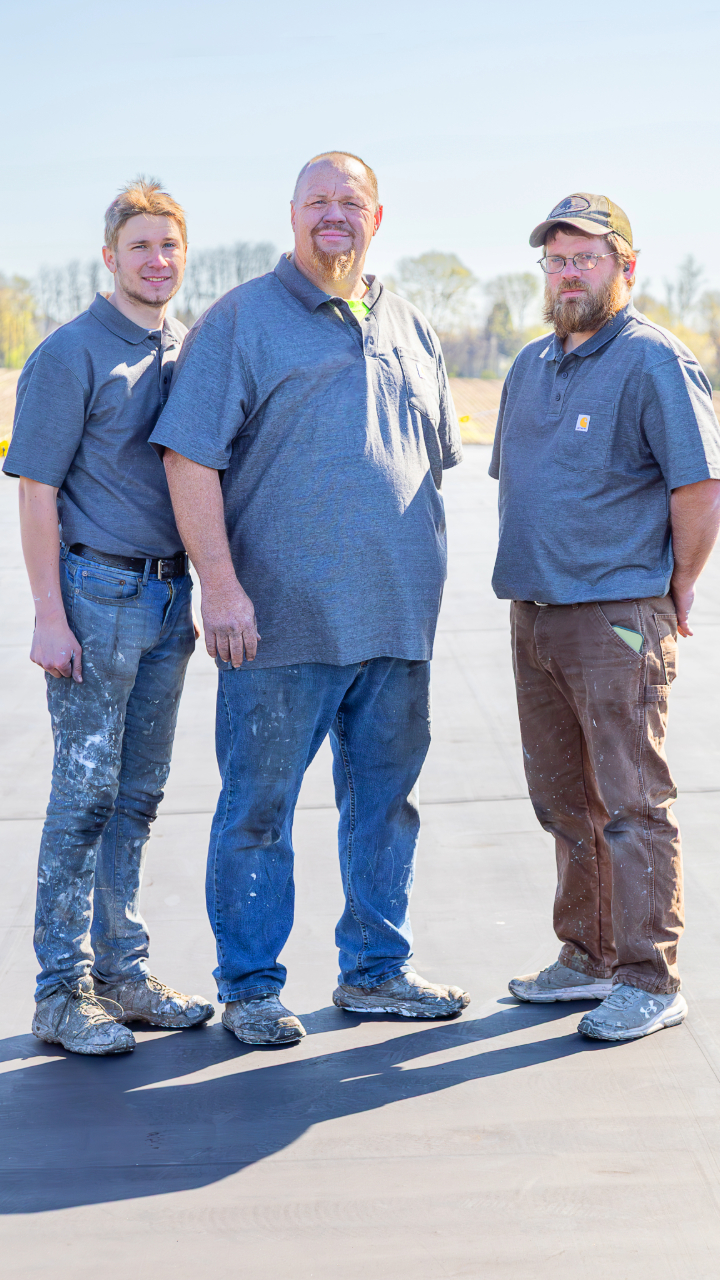
We are not a general roofing contractor that does a coating job here and there. Since 1997, Schultz Roofing, Inc has focused exclusively on commercial roof coatings, maintenance, and restoration. We do not do residential roofing. We do not replace shingles. Every project our crew handles is a commercial flat roof, metal roof, foam system, or membrane - on a warehouse, a school, a church, an office building, or a factory.
That specialization matters when you are dealing with a 20,000 square foot warehouse roof in the Harrisburg area. The material knowledge, the application technique, and the diagnostic process for commercial coating systems is different from general roofing work, and the outcomes reflect that difference. We back our work with warranties up to 20 years, and we have been building that track record across Central Pennsylvania for nearly three decades.
We serve building owners across the region - from our home base in Middleburg through the Harrisburg metro, State College, Selinsgrove, and the surrounding counties. If your building is in Central PA, we can get to you, assess your roof honestly, and tell you what the right path forward looks like before you commit to anything.
Frequently Asked Questions About Commercial Roofing in Harrisburg PA
What types of commercial roofs can be coated in the Harrisburg PA area?
Most flat and low-slope commercial roofs qualify for coating restoration, including EPDM rubber, TPO, PVC, metal, and spray polyurethane foam systems. The key factor is whether the underlying structure and insulation are still sound - a professional assessment will confirm whether restoration or replacement is the right call.
How much does commercial roof coating cost compared to full replacement?
Commercial roof coating restoration typically costs 50-70% less than full replacement on a comparable building. The exact savings depend on roof size, condition, and the coating system selected, but the cost difference is consistently significant for buildings that qualify for restoration.
How long does a commercial roof coating last in Pennsylvania's climate?
A professionally applied commercial roof coating in Pennsylvania typically lasts 10-15 years with proper maintenance. Quality coating systems backed by professional installation can carry warranties up to 20 years, depending on the product and application method.
Is summer a good time to apply commercial roof coatings in Harrisburg PA?
Summer can be an effective time for roof coating applications in Central Pennsylvania because warm temperatures support proper curing of most coating systems. The main considerations are avoiding application during rain or extreme heat, which experienced coating contractors plan around as a standard part of scheduling.
Does Schultz Roofing serve commercial buildings in Harrisburg PA?
Yes. Schultz Roofing, Inc serves commercial buildings throughout Central Pennsylvania including the Harrisburg area, operating out of Middleburg PA. We handle warehouses, office buildings, churches, schools, factories, and other commercial properties - but only commercial roofing, not residential.
How do I know if my commercial flat roof needs coating or full replacement?
The key indicators that restoration is still an option include a structurally sound roof deck, dry insulation, and a membrane that has surface degradation but not systemic failure. Signs that push toward replacement include saturated insulation, widespread seam failures, and structural deck damage. A professional assessment from a coating specialist is the most reliable way to determine which path makes sense for your building.
What should I do before calling a commercial roofing contractor in Harrisburg PA?
Document any interior leaks, water stains, or active wet spots. Note how long water stands on the roof after rain. Pull any previous inspection reports or warranty documents you have on the existing roof. This information helps a coating specialist diagnose problems accurately and give you a more precise assessment during the initial visit.