Pennsylvania Commercial Roofing Inspection: What Building Owners Need to Know
A Pennsylvania commercial roofing inspection should happen at least twice a year and after major storms. It identifies membrane damage, drainage issues, and coating failure before leaks start.
If you manage a commercial building in Central Pennsylvania, a Pennsylvania commercial roofing inspection is one of the most cost-effective things you can do for your property this summer. Flat roofs and low-slope membrane systems take a beating from heat, humidity, and the kind of fast-moving thunderstorms that roll through the region from June through August. By the time a leak shows up inside your building, the damage above is usually months old. A professional inspection finds problems while they are still inexpensive to fix - and determines whether a coating restoration can add years of life to your existing roof without the cost of a full tear-off.
At Schultz Roofing, Inc, we have been doing commercial roofing work in Central Pennsylvania since 1997. We are not a general contractor who dabbles in flat roofs - we are a commercial-only coating and restoration specialist. Every assessment we do is focused on one question: what is the best way to protect this building and get the most years out of this roof system?
What Does a Commercial Roofing Inspection Actually Cover?
A lot of building owners assume a roof inspection means someone walks around and takes a few photos. A thorough commercial inspection is more involved than that, especially on flat membrane systems where damage hides under standing water, at seams, or beneath existing coatings that have begun to fail.

Here is what a proper inspection of a commercial flat roof or low-slope system should cover:
Membrane Surface Condition
The inspector looks for blistering, cracking, shrinkage, and surface erosion. On EPDM rubber roofs, the membrane can become brittle over time and develop hairline cracks at seams that are nearly invisible until they open up during a storm. TPO membranes can separate at heat-welded seams, especially on roofs that have experienced significant thermal cycling through Pennsylvania winters and summers. On metal roofs, the inspector looks for rust, coating failure, fastener corrosion, and panel separation.
Flashings and Penetrations
Flashings around HVAC units, pipe penetrations, skylights, and parapet walls are the most common leak points on any commercial roof. These areas flex with temperature changes and are often the first place a roof starts to fail. A good inspection examines every penetration individually, not just a quick glance from the roofline.
Drainage and Ponding Water
Pennsylvania summer storms can drop significant rain in a short window. If your roof's drains are partially blocked or the roof has developed low spots from structural deflection, water will pond. Ponding water is one of the most damaging conditions a flat roof can experience - it accelerates membrane breakdown and adds structural load. Our team pays close attention to drainage patterns and any areas where water is not moving off the roof within 48 hours of rainfall. For more detail on what causes this problem and how to address it, our post on ponding water on flat membranes covers it thoroughly.
Existing Coating Condition
If your roof already has a coating layer, the inspector evaluates its adhesion, thickness, and surface condition. A silicone or acrylic coating that has begun to chalk, crack, or delaminate may need a recoat before it loses waterproofing capability entirely. Catching this early is far less expensive than letting the coating fail and allowing moisture into the substrate beneath.
Need help now? Call Schultz Roofing, Inc at (570) 274-2057 for a free estimate.
Why Summer Is a Critical Time for Pennsylvania Commercial Roof Inspections
Spring inspections get a lot of attention because everyone is looking for winter damage. But summer creates its own set of roofing problems for commercial buildings in Pennsylvania, and a mid-summer inspection can catch issues before they compound into the fall and winter.
📞 Need help now? Call Schultz Roofing, Inc at (570) 274-2057 for a free estimate.

Here is what summer conditions do to commercial roof systems in Central PA:
UV exposure breaks down uncoated membranes fast. An EPDM or TPO roof without a reflective coating absorbs significant heat through the summer months, which accelerates oxidation and surface degradation.
Thermal expansion and contraction opens seams. Daytime temperatures on a dark flat roof surface can exceed 150 degrees Fahrenheit. That expansion and contraction cycles through every seam and flashing on the roof.
Storm damage accumulates gradually. Pennsylvania summer storms are not always dramatic events. Sometimes a series of moderate storms loosens flashings, clogs drains, or pushes debris into low spots without creating an obvious leak. An inspection finds these conditions before they worsen.
Coating systems need assessment before fall application windows. If your roof needs a fresh silicone or acrylic coating, late summer inspection and early fall application is often the right sequence. You want the coating to cure properly before winter, and you need the inspection data first to know what prep work is required.
A reflective roof coating also addresses the energy efficiency angle that matters in summer. Our post on cool roof coatings and summer cooling costs explains how reflective coatings work and what building owners in Central PA can realistically expect in terms of reduced heat load.
Inspection vs. Assessment: How Schultz Roofing Approaches Commercial Roof Evaluation
When our team visits a commercial building in Middleburg, Selinsgrove, Harrisburg, or anywhere across Central Pennsylvania, we are not running through a generic checklist. We are looking at the roof as a system and thinking specifically about whether it is a candidate for coating restoration or whether it needs a different approach.
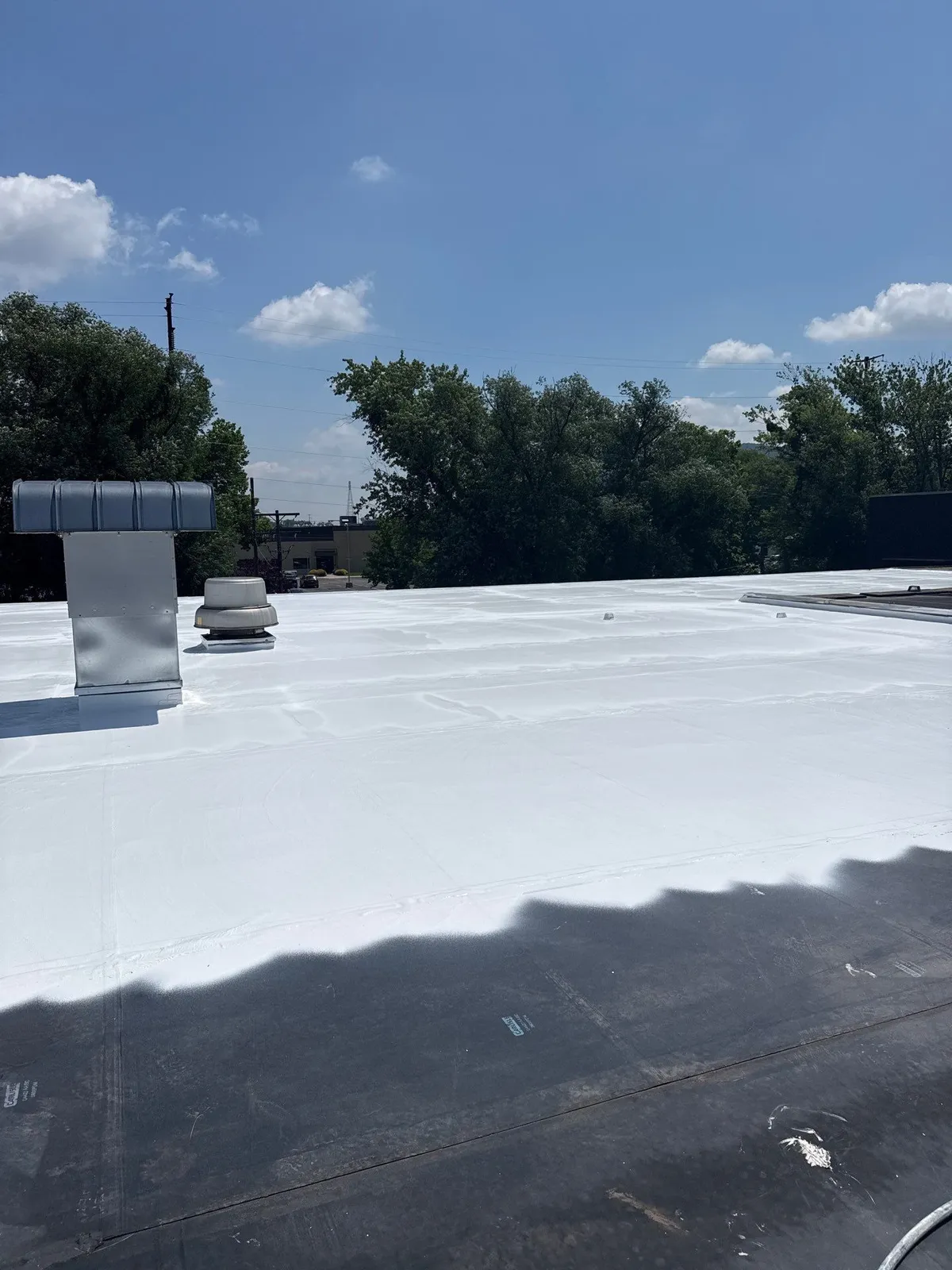
That distinction matters because roof coating restoration - applying silicone, acrylic, or other coating systems over an existing membrane - is only appropriate when the substrate is sound. If the underlying membrane or insulation has sustained significant moisture damage, a coating applied over it will not perform as designed. Part of what a quality inspection does is give you honest information about which path makes sense for your building.
When restoration is the right call, the numbers are compelling. Roof coating restoration typically costs 50-70% less than full tear-off and replacement, and a properly applied coating system can extend the roof's service life by 10-15 years. That math changes how building owners think about their capital planning - instead of budgeting for a major replacement project, they are looking at a restoration cost and a meaningful extension of the roof's useful life.
For a detailed breakdown of how coating compares to replacement, our commercial roof guide walks through the decision factors that matter most for Pennsylvania building owners.
What Types of Commercial Roofs Does Schultz Roofing Inspect?
Because we work exclusively on commercial buildings, we regularly inspect and restore a range of commercial roof systems. The inspection approach varies by system type, so experience with each matters.
Flat and Low-Slope Membrane Roofs
EPDM rubber and TPO membrane systems are the most common on commercial buildings across Central Pennsylvania - warehouses, office buildings, retail facilities, and industrial properties. Both systems have specific failure modes that an experienced inspector knows to look for at seams, terminations, and around any mechanical equipment.
Metal Roofs
Metal roofs on commercial and agricultural buildings throughout the region are frequently candidates for coating restoration. A metal roof inspection looks for rust, failed fasteners, panel separation, and ridge cap condition. Metal roof coatings can stop active leaks and add significant service life without replacing the panels.
Foam Roof Systems
Spray polyurethane foam (SPF) roofs require an inspector who understands how the foam and protective coating layer work together. Surface erosion of the top coat exposes the foam to UV degradation, which moves quickly once it starts. These systems need regular recoating to stay protective.
Churches, Schools, and Municipal Buildings
We work with a lot of non-profit and institutional facilities across Central PA where budget discipline is especially important. For these buildings, a thorough inspection followed by a restoration plan gives facility managers the documentation they need to plan capital expenditures and avoid emergency repair situations that blow the budget.
Frequently Asked Questions About Pennsylvania Commercial Roofing Inspections
How often should a commercial roof be inspected in Pennsylvania?
Most commercial roofing professionals recommend inspecting flat and low-slope roofs at least twice per year - once in spring and once in fall - plus after any major storm event. Buildings with older membrane systems or existing coating layers may benefit from more frequent monitoring.
What does a Pennsylvania commercial roofing inspection include?
A thorough inspection covers the membrane surface, seams and flashings, drainage systems, penetrations, edge metal, and any existing coating or restoration layers for signs of failure or wear. At Schultz Roofing, we also assess whether the roof is a candidate for coating restoration based on substrate condition.
Can a roof inspection determine if I need coating or full replacement?
Yes. A professional inspection assesses substrate condition, moisture levels, and membrane integrity to tell you whether a coating restoration is feasible or whether replacement is the better long-term investment. An honest answer here saves building owners from spending money on a coating over a failed substrate - or from replacing a roof that still has years of serviceable life left.
How much does a commercial roofing inspection cost in Pennsylvania?
Schultz Roofing offers free commercial roof assessments for building owners in Central Pennsylvania. Call (570) 274-2057 to schedule yours. There is no charge for the evaluation, and no obligation to proceed with any work.
What roof problems are most common in Pennsylvania summers?
Summer heat and humidity accelerate membrane shrinkage, blister formation, and coating breakdown on flat roofs. Severe thunderstorms can also cause punctures, seam separation, and drainage blockages. These conditions often develop gradually and are not visible from ground level, which is why a summer inspection is worth scheduling even if there are no obvious signs of trouble inside the building.
Does Schultz Roofing do residential roof inspections?
No. Schultz Roofing is a commercial-only specialist. We inspect and restore flat roofs, EPDM, TPO, metal, and foam roof systems for commercial buildings, warehouses, schools, churches, and offices. We do not work on residential homes or steep-slope shingle roofs.
What happens after a commercial roof inspection at Schultz Roofing?
After the inspection, we provide a written assessment of the roof's condition and a recommendation for the best path forward - whether that is a coating restoration, targeted repairs, a maintenance program, or in some cases an honest recommendation that replacement is the right call. Our goal is to give you accurate information so you can make a good decision for your building, not to sell you the most expensive option.