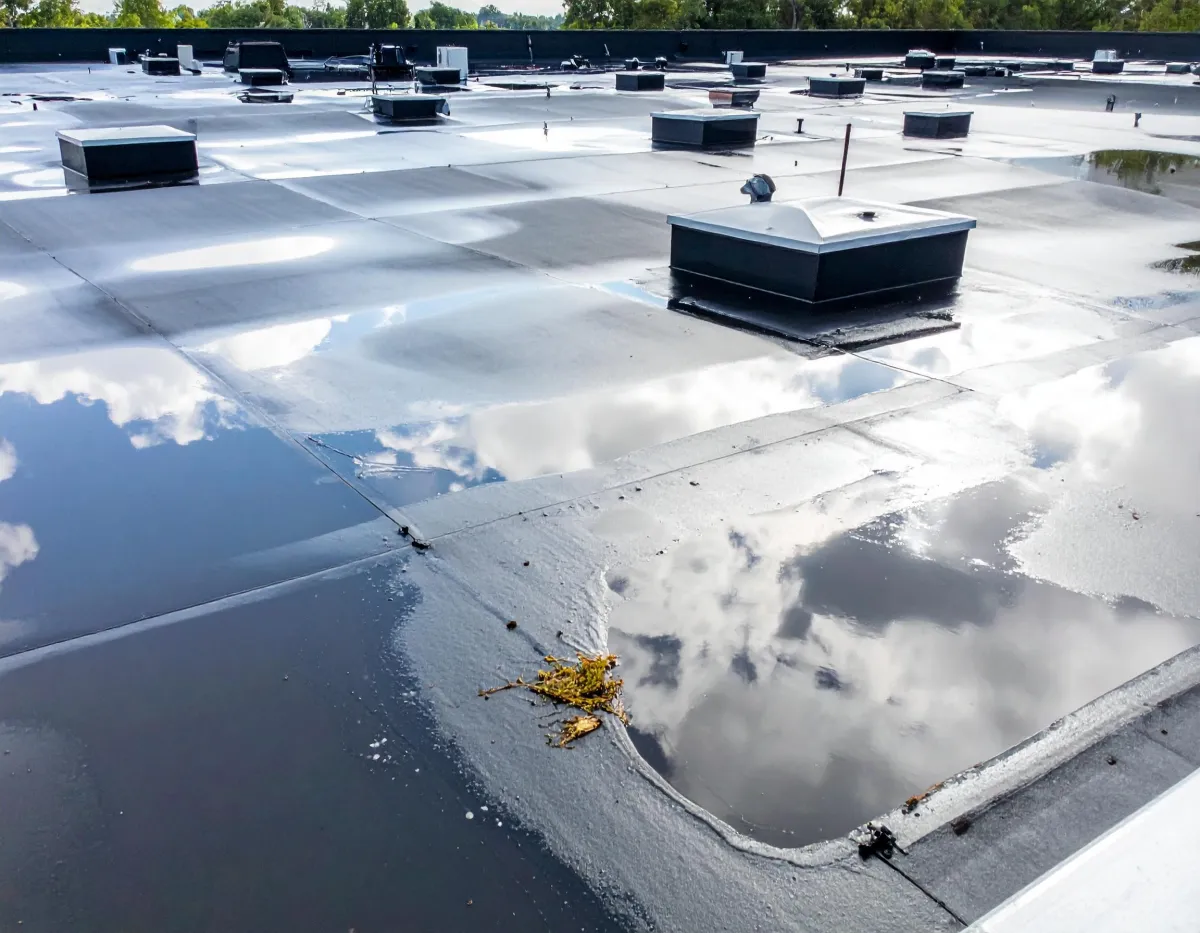
Ponding Water on Flat Membranes: Causes and Prevention for Central PA Commercial Buildings
Ponding water on flat roofs causes membrane breakdown within 1-2 seasons if ignored. The fix starts with correcting drainage, then protecting the surface with a quality commercial roof coating.
If you manage or own a commercial building in Central Pennsylvania - whether it's a warehouse outside Middleburg, a church in Snyder County, or an office building in the Susquehanna Valley - ponding water on your flat roof is one of the most common and most damaging problems you'll face. Pennsylvania summers bring intense thunderstorms and heavy rainfall that stress flat membrane systems in ways that gradual wear simply doesn't. At Schultz Roofing, Inc, we've been assessing and restoring commercial flat roofs across Central PA since 1997, and ponding water is one of the first things our team looks for during every roof assessment.
This post breaks down exactly what causes ponding water, what it does to your membrane over time, and what steps you can take to stop it before it turns into a much more expensive problem.
What Is Ponding Water and Why Does It Matter on Flat Membranes?
The roofing industry defines ponding water as any water that remains standing on a roof surface for 48 hours or longer after rainfall ends. On a properly designed flat roof, water should drain completely within that window. When it doesn't, you have a ponding problem.
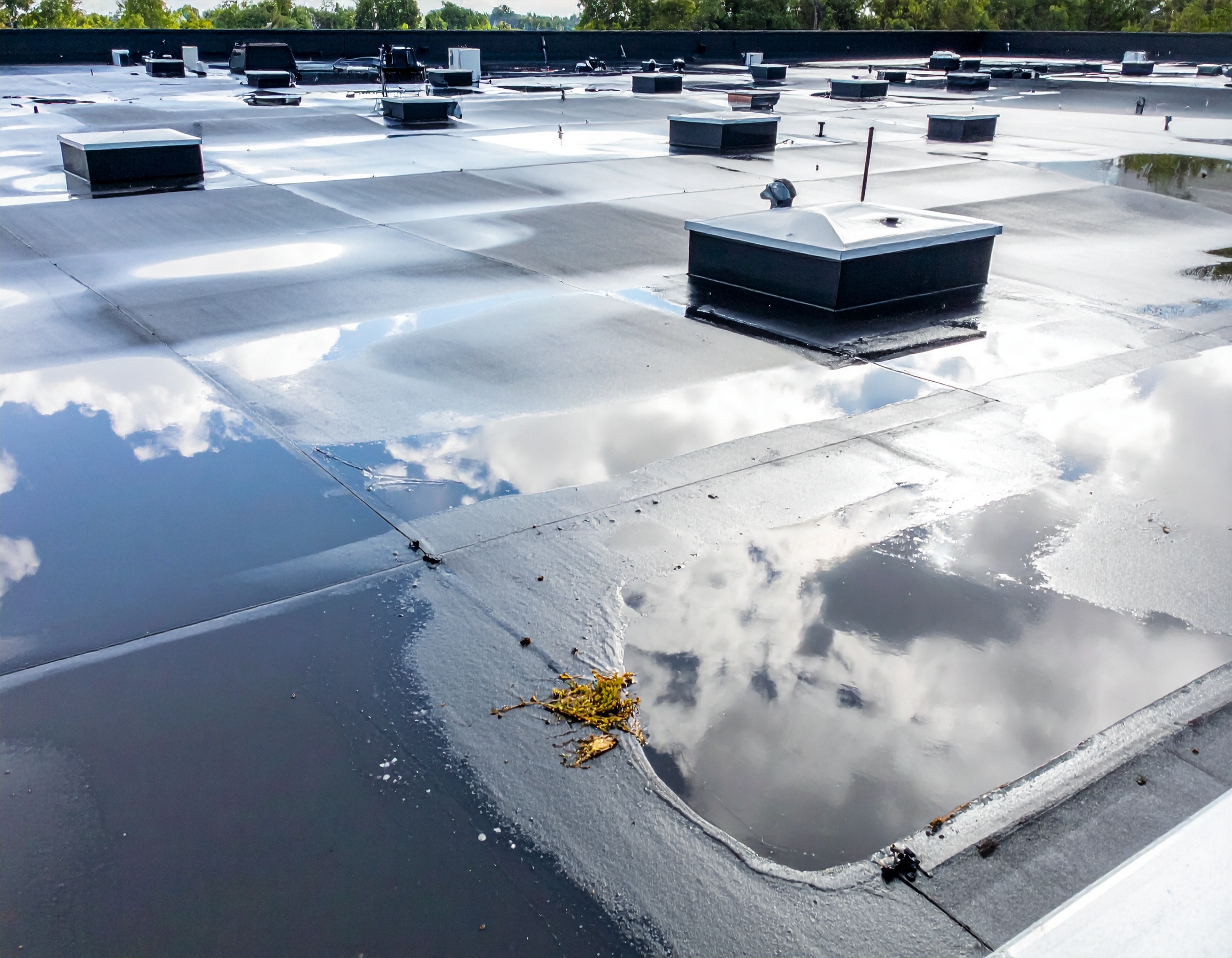
This matters a great deal on membrane roofs - EPDM, TPO, and similar systems - because those materials are designed to shed water, not hold it. Standing water puts continuous stress on the membrane in several ways:
UV accelerated degradation: Water acts as a lens, concentrating UV exposure on the membrane surface directly beneath the pond. This breaks down the material faster than normal weathering.
Seam and lap failure: Constant moisture at seams weakens adhesives and allows water to work into laps, eventually creating leak pathways.
Algae and biological growth: Standing water in Pennsylvania's warm, humid summers creates ideal conditions for algae, moss, and biological growth that further degrade the membrane.
Added structural load: Water weighs approximately 5 pounds per square foot per inch of depth. A large pond even a few inches deep adds significant, unintended load to the roof deck and structure.
Freeze-thaw damage: Water trapped in low spots expands when it freezes, forcing its way into any existing cracks or compromised seams.
Left alone, a persistent ponding problem can take a roof that had years of serviceable life left and accelerate it toward failure within a season or two. The good news is that most ponding issues are preventable and correctable - especially when caught early.
Need help now? Call Schultz Roofing, Inc at (570) 274-2057 for a free commercial roof assessment.
What Causes Ponding Water on Commercial Flat Roofs?
Understanding the root cause is essential before you can fix the problem. Ponding water on flat commercial roofs in Central Pennsylvania generally comes from one of four sources:
📞 Need help now? Call Schultz Roofing, Inc at (570) 274-2057 for a free estimate.
1. Clogged or Inadequate Drainage
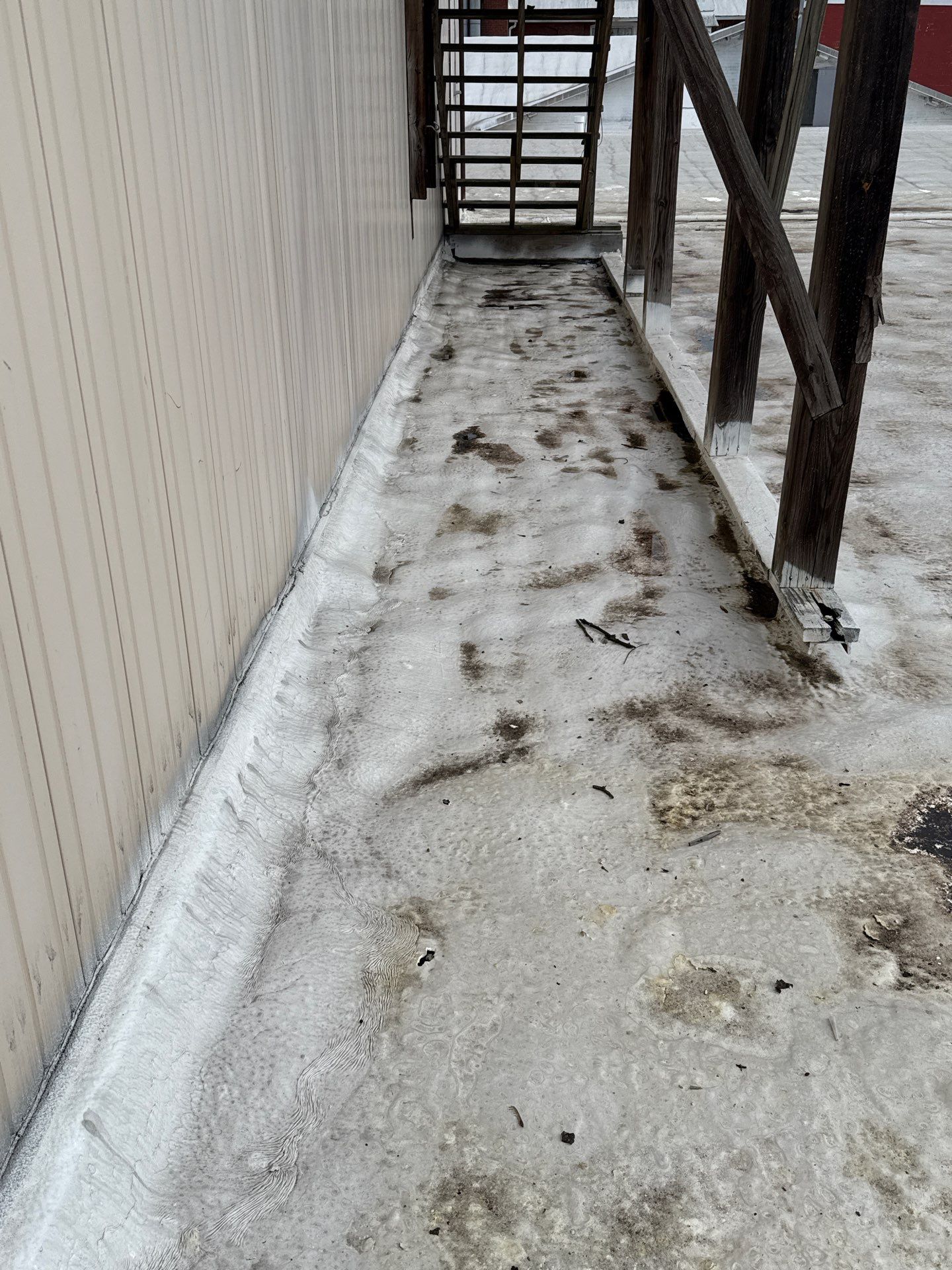
This is the most common cause we see. Roof drains, scuppers, and gutters clog with leaves, debris, bird nesting material, and dirt - especially during and after summer storms. When drainage is blocked, water has nowhere to go and sits on the surface. The fix is straightforward: regular drain maintenance. But many building owners only notice the problem after the membrane is already showing stress.
2. Structural Deflection and Sagging
Over time, roof decks can sag between structural members due to age, moisture damage, or overloading. Even a subtle dip of a quarter inch can create a low spot that collects water after every rain event. If the deck itself has settled unevenly, no amount of drain cleaning will solve the problem - the surface geometry is working against drainage.
3. Improper Original Slope
Commercial flat roofs are not truly flat. They're designed with a minimum slope - typically 1/4 inch per foot - to move water toward drains. When original construction didn't achieve adequate slope, or when insulation has compressed over the years and reduced the designed pitch, water pools in low areas by default. This is a design issue, not just a maintenance issue.
4. Membrane Displacement or Bubble Formation
On EPDM and TPO roofs, trapped moisture or adhesion failures can create bubbles and blisters in the membrane surface. These distortions create micro-ponds and prevent water from draining toward the intended outlets. Blisters also compromise the membrane's insulating and waterproofing properties.
For more background on how flat roof systems age and what restoration options exist, our commercial roof guide walks through the most common membrane types and their typical lifecycles in Pennsylvania's climate.
How to Assess the Severity of a Ponding Problem
Not all ponding is equally urgent. Here's a practical way to think about severity:
Minor Ponding (Surface Level)
Small, shallow puddles that appear after heavy rain but drain within 24-36 hours are low priority but worth monitoring. Clean drains regularly, clear any debris blocking flow paths, and document where water collects during and after storms.
Moderate Ponding (Recurring Pattern)
If you see the same areas holding water after every rain event, and those pools persist past the 48-hour mark, you have an active issue. At this stage, the membrane in the pond area is under consistent stress. You need a professional to assess whether the cause is drainage, structural deflection, or slope, and what correction is required before any coating work can be done properly.
Severe Ponding (Structural Concern)
Large ponds, water that visibly distorts the roof surface, or any ponding accompanied by interior leaks or ceiling staining represents a situation that needs immediate professional attention. The membrane may already be compromised, and there could be moisture in the insulation layer underneath - which changes what restoration options are viable.
At Schultz Roofing, Inc, our team uses roof assessments to identify exactly which category a building falls into. That assessment shapes everything that comes next - whether the right answer is drain correction, tapered insulation to improve slope, a fresh commercial roof coating PA application, or a combination of approaches.
Prevention: What Building Owners in Central PA Should Be Doing
The most cost-effective approach to ponding water is preventing it from becoming a serious problem in the first place. Here's what a solid prevention program looks like for commercial flat roofs in Pennsylvania:
Scheduled Drain Cleaning
Clean interior drains, scuppers, and gutters at least twice a year - once in late spring before summer storm season, and once in fall before leaf drop. Pennsylvania's summer storms can deposit significant debris on a roof surface in a single event. After any major storm, a quick walk of the roof to clear drains takes minutes and prevents hours of membrane stress.
Routine Roof Inspections
A professional inspection twice a year catches developing issues before they become expensive repairs. An experienced eye can spot membrane blistering, seam lifting, drain deterioration, and the early signs of structural deflection that a building owner walking the roof might miss entirely. Our team at Schultz Roofing, Inc looks at these systems every day - we know what healthy looks like versus what's heading toward failure.
Tapered Insulation Systems
When slope is the root cause of persistent ponding, tapered insulation is often the most practical long-term fix. A tapered system installed over the existing deck creates the necessary pitch to direct water to drains without requiring structural modification. It adds insulation value at the same time. This is a one-time correction that solves the problem for the life of the roof system.
Protective Roof Coatings
Once drainage issues are corrected, a quality flat roof coating system provides a layer of protection that helps the membrane withstand the moisture and UV stress that comes with Pennsylvania summers. Silicone roof coating systems, in particular, are formulated to handle standing water better than most other options - an important consideration for roofs where some minor ponding may be unavoidable due to geometry. A proper coating also seals existing seams and minor surface deterioration, extending the serviceable life of the underlying membrane by years.
If you're weighing whether restoration makes more financial sense than replacement, our blog post on commercial roof coatings vs. full replacement lays out the cost comparison in detail - including why most building owners in Central PA are better served by restoration than tearing off and starting over.
Keep the Roof Surface Clear
Debris piles create micro-dams that redirect water away from drains and into low spots. HVAC equipment, mechanical supports, and any roof penetrations should be inspected regularly for debris accumulation around their bases. These are common ponding trigger points that are easy to manage with a basic maintenance program.
The Bottom Line on Ponding Water and Roof Restoration in Pennsylvania
Ponding water is one of those problems that seems minor when it starts and serious by the time most building owners act on it. The key insight from nearly three decades of commercial roofing work in Central PA is this: the water itself isn't the whole problem. The real problem is what happens to the membrane when water sits on it through a full Pennsylvania summer - the heat, the UV load, the biological growth, and the weight all compounding together.
The good news is that most buildings with ponding issues are excellent candidates for roof restoration rather than full replacement, provided the drainage problem is corrected first. A commercial roof coating applied to a properly prepped surface - with slope and drainage issues addressed - can deliver 10-15 more years of serviceable roof life at a fraction of replacement cost. That's the work Schultz Roofing, Inc has specialized in since 1997, serving commercial buildings across Middleburg, Snyder County, and all of Central Pennsylvania.
If your roof is holding water and you're not sure what the right next step is, the best move is a professional assessment. We offer free commercial roof assessments with no obligation - call us at (570) 274-2057 and we'll come take a look, tell you exactly what we're seeing, and give you a straight answer on what your options are. You can also visit our service FAQ for answers to common questions about the assessment and coating process before you call.
Frequently Asked Questions About Ponding Water on Commercial Flat Roofs
What is ponding water on a flat roof?
Ponding water is any water that remains standing on a flat roof membrane for 48 hours or more after rainfall stops. It indicates a drainage problem and can accelerate membrane deterioration significantly over time.
How long can water sit on a flat roof before it causes damage?
Industry standards treat water standing more than 48 hours after rainfall as a ponding condition. Prolonged exposure accelerates UV degradation, seam failure, biological growth, and structural stress on the roof deck - all of which shorten the membrane's usable life.
What causes ponding water on commercial flat roofs?
The most common causes are clogged or undersized drains, structural deflection causing the deck to sag, insufficient slope from original construction, and membrane blistering or displacement that creates low spots. Most cases involve more than one contributing factor.
Can a roof coating fix a ponding water problem?
A roof coating addresses the membrane damage caused by ponding and provides protection going forward, but the underlying drainage issue must be corrected first. Coating over an active ponding problem without fixing drainage will not produce a lasting result.
How much does it cost to fix ponding water on a commercial roof?
Costs depend heavily on the cause and severity. Drain cleaning is minimal. Tapered insulation to correct slope involves more investment but is still far less expensive than full roof replacement. A professional assessment is the right starting point to understand what your specific building actually needs.
Is ponding water damage covered by commercial roof warranties?
Many manufacturer warranties specifically exclude damage caused by ponding water, particularly if the drainage issue existed before the coating was applied. Addressing drainage before any new coating system is installed is critical to maintaining valid warranty coverage.
How do I prevent ponding water on my commercial flat roof?
The core of any prevention program is regular drain cleaning, scheduled professional inspections, keeping the membrane surface free of debris, and correcting any structural or slope issues as soon as they're identified. A commercial roof coating specialist can evaluate your drainage situation during a free roof assessment and recommend the right course of action.