Spring Roof Inspection: What to Look For After Winter in Central PA
Spring commercial roof inspections should focus on 8 critical areas: membrane damage, ponding water, flashing issues, drainage problems, coating deterioration, seam separation, penetration leaks, and debris accumulation after Central Pennsylvania's harsh winter conditions.
Winter in Central Pennsylvania can be brutal on commercial roofing systems. With freeze-thaw cycles, ice dams, heavy snow loads, and temperature swings that can exceed 60 degrees, your commercial roof takes a beating from December through March. At Schultz Roofing, Inc, we've been helping Middleburg area businesses recover from winter damage for over 27 years, and spring inspections are absolutely critical for preventing small issues from becoming major problems.
Whether your commercial building has EPDM, TPO, modified bitumen, or metal roofing, the transition from winter to spring creates unique challenges that require immediate attention. Our team has seen how Pennsylvania's weather patterns specifically impact different roofing materials, and timing your inspection correctly can save thousands in emergency repairs.
Critical Areas to Inspect on Your Commercial Roof This Spring
After nearly three decades of commercial roof inspections in Central Pennsylvania, we've identified eight critical areas that demand immediate attention each spring. These problem zones are where winter damage typically manifests first and where small issues quickly escalate into costly repairs.
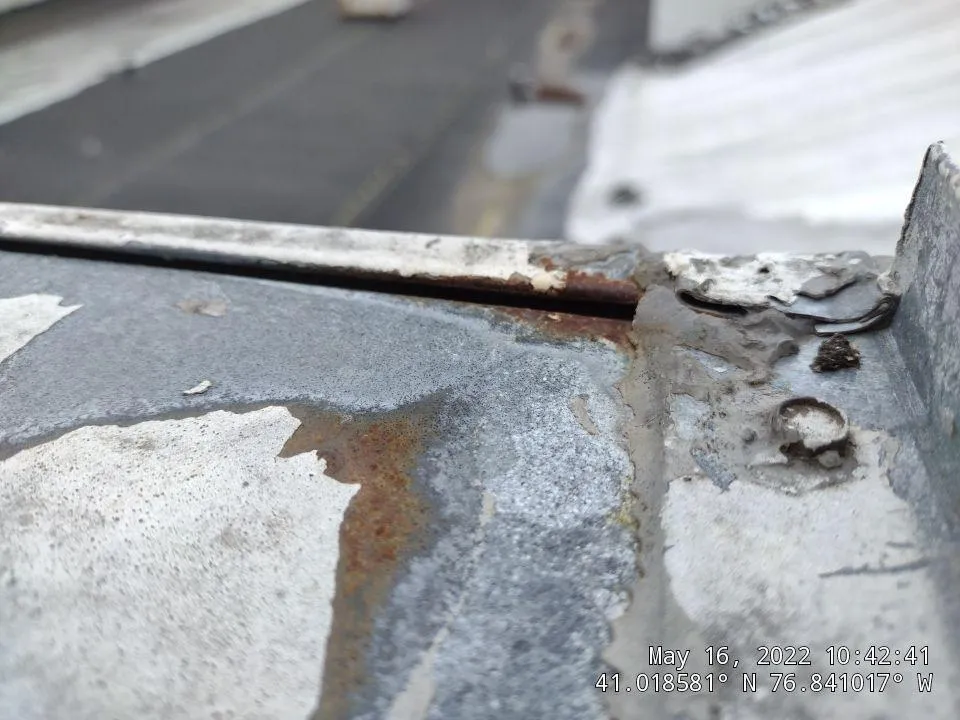
Close-up view of a deteriorating flat roof showing significant rust damage, peeling coatings, and metal corrosion around roof penetrations and seams. - Schultz Roofing, Inc
Membrane Surface and Coating Condition
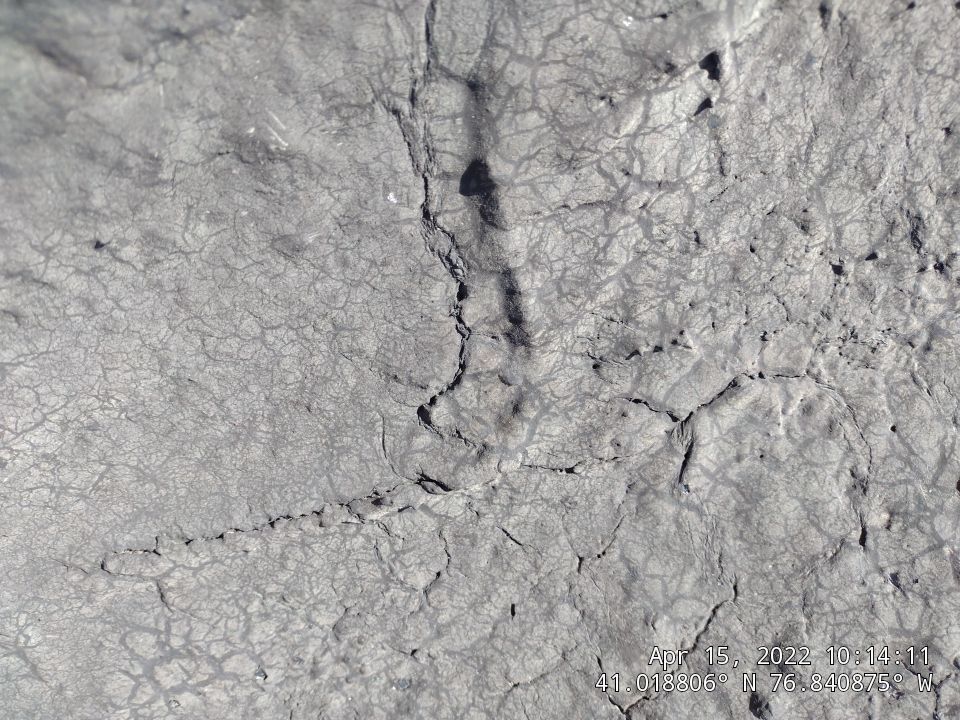
Start your inspection by examining the overall roof membrane surface. Look for cracks, splits, blisters, or punctures that may have developed during winter freeze-thaw cycles. On EPDM roofs, check for shrinkage around the perimeter. TPO membranes should be inspected for thermal movement cracks, especially near rooftop equipment.
If your roof has protective coatings, spring is the perfect time to assess their condition. Signs your flat roof needs recoating in Central Pennsylvania become most apparent after winter weather exposure, including chalking, cracking, or complete coating failure in high-traffic areas.
Drainage Systems and Ponding Water
Pennsylvania's spring rains can quickly reveal drainage problems that developed over winter. Inspect all drains, scuppers, and gutters for blockages from leaves, ice, or debris. Pay special attention to areas where water ponds for more than 48 hours after rainfall - this indicates drainage issues that will worsen throughout the year.
📞 Need help now? Call Schultz Roofing, Inc at (570) 274-2057 for a free estimate.
Flashing and Penetration Inspection Points
Roof penetrations and flashing systems are particularly vulnerable to winter damage in Central Pennsylvania. Temperature fluctuations cause expansion and contraction that can loosen fasteners, crack sealants, and separate flashing from the membrane.
📞 Need help now? Call Schultz Roofing, Inc at (570) 274-2057 for a free estimate.
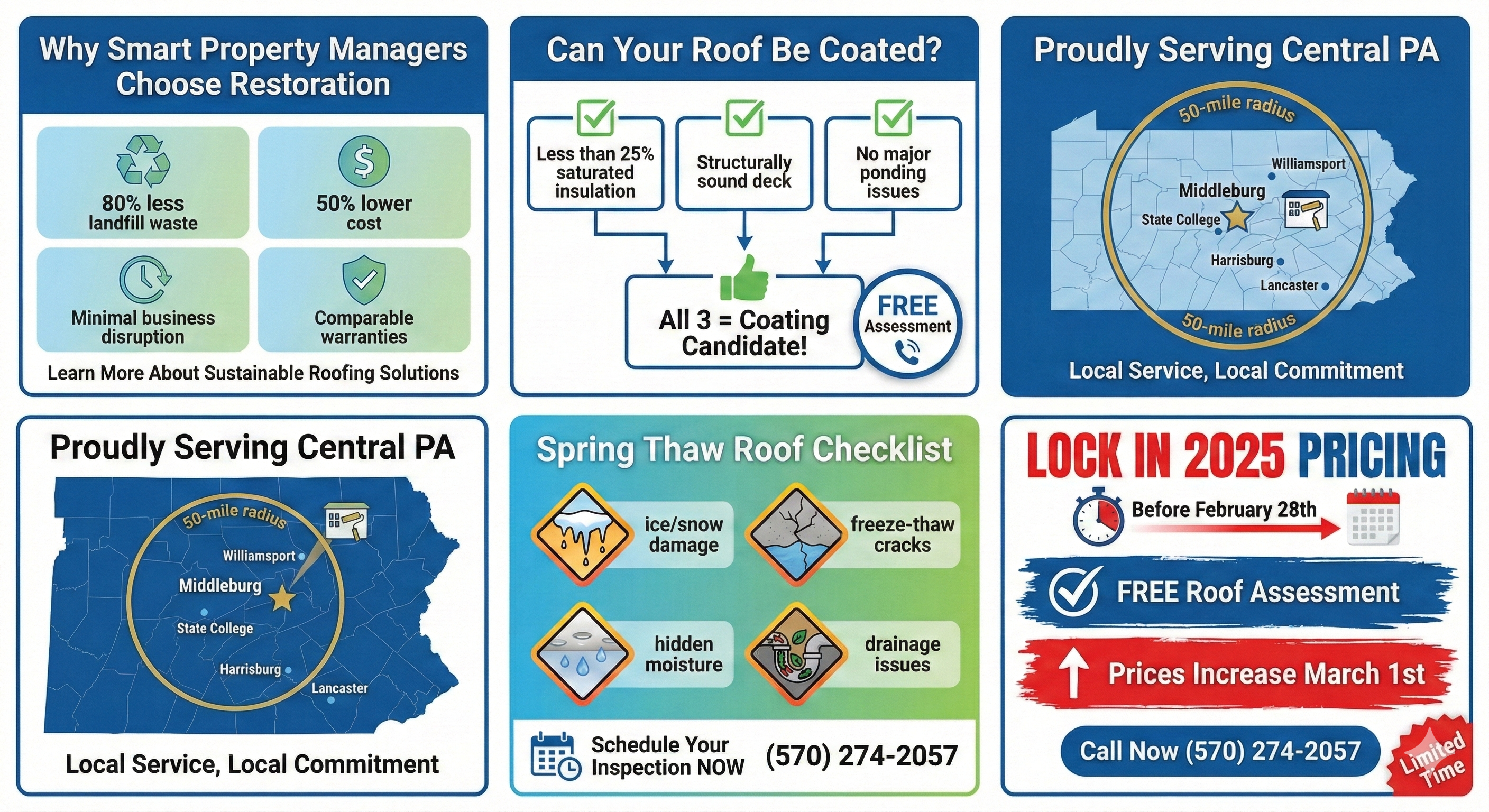
Marketing infographic showing roof coating eligibility criteria and spring roof damage checklist, highlighting potential $10,000+ savings compared to full roof replacement with commercial roof coatings that cost 75% less. - Schultz Roofing, Inc
HVAC Equipment and Ductwork
Examine all HVAC unit penetrations, ductwork connections, and equipment supports. Winter winds can shift equipment slightly, creating gaps in flashing systems. Check for rust stains, which indicate water infiltration, and look for loose or missing fasteners that may have worked free during freeze-thaw cycles.
Pipes, Vents, and Electrical Penetrations
Every pipe boot, vent flashing, and electrical penetration should be carefully inspected. These small penetrations are often overlooked but can cause significant interior damage when they fail. Look for cracked rubber boots, separated sealants, or any signs of movement around the penetration.
Structural and Safety Concerns After Winter
Spring inspections must include structural assessments, especially after heavy snow loads. Pennsylvania's variable winter weather can create ice dams, excessive snow accumulation, and rapid melting that stresses roofing systems beyond their design limits.
Deck Deflection and Membrane Stress
Walk the roof surface carefully, feeling for any soft spots or unusual deflection in the deck. Excessive snow loads can damage roof decking, creating low spots that will pond water and stress the membrane system. Document any areas that feel spongy or show visible deflection.
Seam Integrity and Fastener Systems
Thermal movement during winter can stress membrane seams and fastener patterns. On mechanically attached systems, look for loose or backed-out fasteners. Fully adhered systems should be checked for edge lifting or seam separation, particularly along the roof perimeter where wind uplift is strongest.
At Schultz Roofing, Inc, we often find that warning signs your commercial flat roof needs recoating become most apparent during spring inspections, when winter damage has compromised the protective coating layer.
When to Call Professional Commercial Roofing Contractors
While property managers can perform basic visual inspections, certain conditions require immediate professional assessment. Our experience serving Middleburg, Millmont, and throughout Central Pennsylvania has shown us that early professional intervention saves money and prevents emergency situations.
Emergency Indicators
Contact professional roofers immediately if you discover active leaks, large membrane tears, significant ponding water, or any structural concerns. These conditions will worsen rapidly with spring rains and require immediate attention to prevent interior damage.
Preventive Maintenance Opportunities
Spring is also the ideal time to consider preventive maintenance solutions. Extending your commercial roof lifespan in Central PA often depends on addressing minor issues found during spring inspections before they become major problems.
Our commercial-only focus means we understand the unique challenges facing warehouses, factories, offices, churches, and schools in Central Pennsylvania. We've developed inspection and maintenance protocols specifically for our region's climate and the commercial buildings we serve.
Frequently Asked Questions
How often should commercial roofs be inspected in Pennsylvania?
Commercial roofs should be professionally inspected twice yearly - once in spring after winter damage and once in fall before winter weather arrives. Additional inspections after severe weather events are also recommended.
What are the most common winter damage issues on flat roofs?
The most common issues include membrane cracking from freeze-thaw cycles, flashing separation, drainage blockages, coating deterioration, and ponding water from ice dam formation.
Can I perform my own commercial roof inspection?
While basic visual inspections can identify obvious problems, professional inspections are recommended for comprehensive assessment. Commercial roofing systems require specialized knowledge to identify potential issues before they cause damage.
When is the best time to schedule spring roof inspections?
Schedule spring inspections in April or May in Central Pennsylvania, after winter weather has ended but before heavy spring rains begin. This timing allows for repairs before the wet season.
What should I do if I find damage during my spring inspection?
Document all damage with photos, prioritize any active leaks or structural concerns, and contact a professional commercial roofing contractor immediately for assessment and repair recommendations.
Don't wait for small problems to become expensive emergencies. Spring roof inspections are your best defense against costly repairs and business interruption. At Schultz Roofing, Inc, our 27+ years of commercial-only experience in Central Pennsylvania means we know exactly what to look for and how to address the unique challenges our climate presents to commercial roofing systems.
Contact Schultz Roofing, Inc today at (570) 274-2057 to schedule your professional spring roof inspection. Our team serves Middleburg, Millmont, and all of Central Pennsylvania with comprehensive commercial roof maintenance, restoration, and coating services. Visit schultz-commercial-roofing.com to learn more about our commercial-only roofing solutions.